Agaricus blazei: beta-glucans, composition and research status
Share
Agaricus blazei: beta-glucans, composition and research status
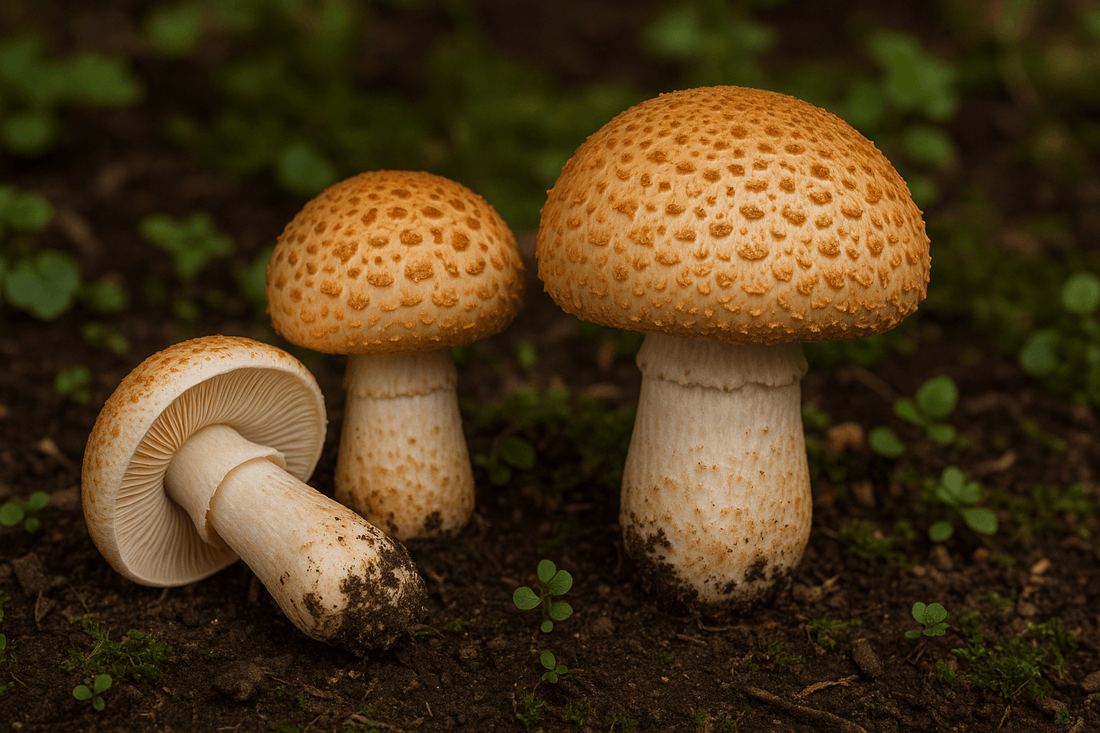
Agaricus blazei, now often identified as Agaricus subrufescens, became popular in the 20th century, particularly in Brazil and later in Japan. It is mainly studied for its polysaccharides and beta-glucans.
This page no longer aims to sell an Ômara extract — the product is no longer in the catalogue — and now focuses on a clear informational intent: understanding the mushroom, its composition and the limits of the evidence.
Agaricus blazei or Agaricus subrufescens?
The nomenclature of this mushroom has evolved and several names have been used in the literature and in commerce. Agaricus subrufescens is now a widely used scientific name, while “Agaricus blazei” remains very common in commercial language and consumer searches.
A different history from Reishi or Cordyceps
Unlike Reishi, whose use has long been documented in Asian traditions, Agaricus blazei was mainly popularized from the 20th century onward. Its modern history is linked to observations in Brazil, followed by strong interest from Japanese researchers.
→ Read the history of medicinal mushrooms
Beta-glucans
Beta-glucans are polysaccharides found in the cell walls of many mushrooms. Those in Agaricus have been studied for their interactions with various immune mechanisms.
The term “immunomodulatory” describes a research area. It does not mean that a supplement prevents infection, treats cancer or necessarily increases the defenses of a healthy person.
Other polysaccharides and compounds
The literature describes various polysaccharide complexes, proteins, sterols and secondary metabolites. Their profile depends on the strain, cultivation, fruiting body or mycelium, and extraction process.
What do the studies show?
A large proportion of the research concerns preclinical models. Some human studies exist in specific contexts, but they are not sufficient to turn Agaricus blazei into a medical treatment.
Older versions of this article made overly affirmative claims about tumor prevention, blood sugar regulation and cardiovascular effects. These claims have been removed because they exceeded the available level of evidence and also blurred the page’s SEO intent.
How to compare extracts?
- scientific name and strain when available;
- part used;
- powder or extract;
- actual beta-glucan content rather than “total polysaccharides” alone;
- microbiological and contaminant analyses;
- manufacturer traceability.
Precautions
Concentrated Agaricus supplements are not necessarily suitable for everyone. Professional advice is particularly relevant in cases of autoimmune disease, immunosuppressive treatment, pregnancy, breastfeeding or mushroom allergy.
Where does it fit among other mushrooms?
Agaricus stands out mainly because of research around its polysaccharides. For exercise, Cordyceps has a clearer intent. For cognition, see Lion’s Mane. To compare species, use our adaptogenic mushroom guide.
In summary
Agaricus blazei remains interesting for understanding the diversity of fungal beta-glucans and the history of mushroom research. This page now has a documentary role, with no CTA to a discontinued product and no therapeutic promise.