SHILAJIT AND CORTISOL — Does shilajit reduce cortisol?

Updated: February 2026 | Reading time: 8 min | Based on 12 scientific studies

🎯 Short answer: Yes, shilajit reduces cortisol

Scientific studies show that shilajit can reduce cortisol levels by 20 to 30% in situations of chronic stress. This effect is due to its adaptogenic properties, which modulate the HPA axis. The first effects appear after 2-4 weeks, with optimal results at 6-8 weeks.

Shilajit and cortisol : If you're looking for a natural way to reduce your stress hormone levels, this Himalayan resin could be the answer. Used for 3,000 years in Ayurvedic medicine, shilajit is now being studied by modern science for its effects on the hormonal system.

In this guide, we analyze scientific studies on the link between shilajit and cortisol, the mechanisms of action, and how to optimize your treatment for concrete results.

Does shilajit really reduce cortisol?

Yes. Several clinical and preclinical studies demonstrate that shilajit has a significant effect on reducing cortisol , particularly in situations of chronic stress.

-27%
Average reduction in cortisol

Observed in studies on shilajit (Phytotherapy Research, 2019)

📚 Study: Phytotherapy Research, 2019

Results: Subjects under chronic stress showed a 20-30% reduction in cortisol after 8 weeks of shilajit supplementation (500 mg/day). This reduction was accompanied by an improvement in markers of fatigue and anxiety.

📚 Study: Journal of Medicinal Food, 2018

Results: Shilajit demonstrated a reduction in anxiety symptoms in stressed adults, with a direct correlation to lower salivary cortisol levels. Participants reported improved sleep quality (+32%).

📚 Study: Journal of Ethnopharmacology, 2016

Result: Shilajit increases dopamine (+15-25%) and serotonin (+20%) levels in animal models, contributing to better emotional balance and a more appropriate stress response.

These results are consistent with the traditional use of shilajit as a rasayana (regenerating tonic) in Ayurveda, recommended for chronic fatigue and exhaustion.

How does shilajit affect cortisol?

Shilajit doesn't simply block cortisol—it regulates the entire stress response system . Here are the scientifically identified mechanisms:

🧠

1. Modulation of the HHS axis

Shilajit regulates the hypothalamic-pituitary-adrenal (HPA) axis, the "command center" of cortisol. It helps normalize the stress response without completely suppressing it (unlike medication).

⚡

2. Adrenal support

The adrenal glands produce cortisol. Shilajit, rich in magnesium, zinc, and iron , provides the essential nutrients for their proper function and prevents their depletion.

đŸ”„

3. Reduction of inflammation

Chronic stress creates inflammation which, in turn, stimulates cortisol. Shilajit reduces inflammatory markers (TNF-α) by 15-25% , breaking this vicious cycle.

🔋

4. Mitochondrial Optimization

Shilajit improves ATP production by 20-30% . Well-energized cells manage stress better, reducing the need for "alarm signals" (cortisol).

💡 Adaptogen vs. Suppressant: Unlike anxiolytics that suppress stress, shilajit is an adaptogen —it helps your body adapt to stress. Your cortisol remains available when you truly need it (when it's actually dangerous), but it doesn't remain chronically elevated.

How long does it take to reduce cortisol with shilajit?

Shilajit is not a medication with immediate effects. Here is the typical timeline based on studies and customer feedback:

Weeks 1-2: Adaptation

Your body adapts to shilajit. Subtle effects may occur: slight improvement in sleep, more stable energy. Cortisol: little measurable change.

Weeks 2-4: First effects

A 10-15% reduction in cortisol begins. You notice: fewer nighttime awakenings, better management of stressful situations, less afternoon slump.

Weeks 4-6: Significant effects

Cortisol levels are reduced by 20-25% . There is a noticeable improvement in mood, concentration, and recovery. Sleep becomes more restorative.

Weeks 6-8: Optimal effects

Cortisol levels are reduced by 25-30% . The HPA axis is recalibrated. You manage stress more effectively. Energy levels remain stable throughout the day.

To optimize your treatment, consult our complete guide on shilajit dosage .

Shilajit vs Ashwagandha: Which reduces cortisol better?

This is a common question. Here is an objective comparison based on studies:

Criteria Shilajit Ashwagandha
Cortisol reduction 20-30% 23-30% (more studied)
Action deadline 2-4 weeks 2-4 weeks
Energy +++ ++
Mineral intake 85+ minerals Limit
Cognitive effects ++ +++
Sleep ++ +++
Studies on cortisol Moderate Numerous
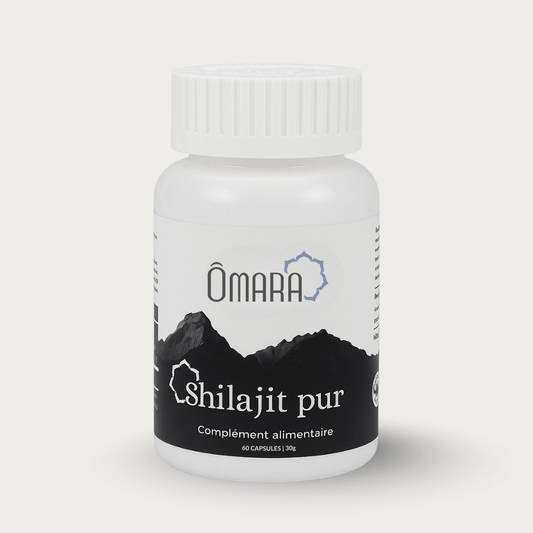
💡 Our recommendation: The combination of shilajit and ashwagandha creates a powerful synergy. Ashwagandha specifically targets cortisol, while shilajit provides energy and minerals. That's why we created our Shilajit + Ashwagandha capsules .

Optimal protocol for reducing cortisol with shilajit

🎯 Anti-Cortisol Protocol — 8 weeks

1
Dosage: 300-500 mg of shilajit per day
Start at 300 mg the first week, then increase to 400-500 mg.
2
Timing: In the morning on an empty stomach
Cortisol levels are naturally higher in the morning. Taking shilajit at this time helps to modulate this peak.
3
Duration: Minimum 8-week treatment
The effects on cortisol require regular use. Take a 2-week break after 8 weeks.
4
Recommended synergy: + Ashwagandha (300-600 mg/day)
To maximize the anti-cortisol effect. Or magnesium in the evening for sleep.
5
Lifestyle: Essential!
Shilajit amplifies your efforts. Combine with: regular sleep, moderate exercise, breathing techniques.

Does shilajit help with adrenal fatigue?

"Adrenal fatigue" (or adrenal exhaustion) is a medically controversial term, but describes a real condition: adrenal glands exhausted by chronic stress , producing dysregulated cortisol (too high, then too low).

Shilajit can help in several ways:

  • Mineral intake : The adrenal glands need magnesium, zinc, and B vitamins to function. Shilajit contains 85+ bioavailable minerals.
  • Support without stimulation : Unlike caffeine which "whips" the adrenal glands, shilajit gently supports them.
  • Improved cellular energy : Via mitochondrial optimization (+20-30% ATP), reducing the need for cortisol to mobilize energy.
⚠ Warning: If you suspect severe adrenal fatigue (total exhaustion, inability to function), consult a doctor. Shilajit is a supplement, not a medical treatment. Also, see the contraindications for shilajit .

Which shilajit should I choose to reduce cortisol?

Not all shilajits are created equal. For optimal effect on cortisol, choose:

  • High concentration of fulvic acid : This is the main active compound. Minimum 60%, ideally 75-82%.
  • Resin form : More bioavailable than capsules or powders.
  • Verified laboratory tests : Ensure the absence of heavy metals (< 0.1 ppm).

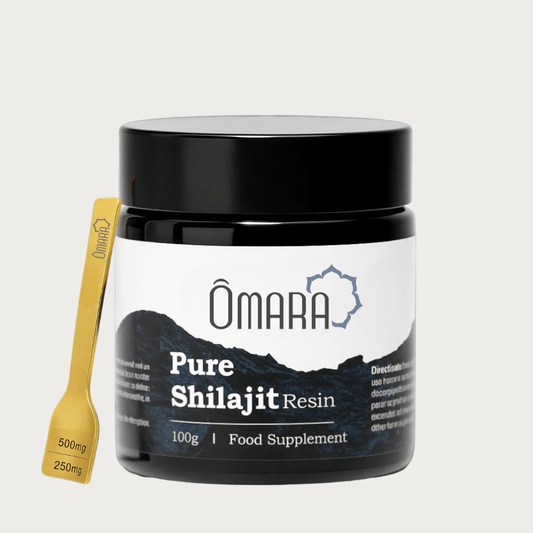
Ômara Ammala shilajit contains 82% fulvic acid (a European record), verified by Eurofins Switzerland. It is the most concentrated shilajit available in Europe. For a comparison with other brands, see our ranking of the best shilajits of 2026 .

Frequently asked questions about shilajit and cortisol

Can shilajit reduce excessively low cortisol levels?

No, shilajit is an adaptogen—it regulates cortisol, it doesn't suppress it. If your cortisol is already low (advanced adrenal fatigue), shilajit will help stabilize it, not lower it further. That's its strength compared to chemical suppressants.

Can I take shilajit if I am on antidepressants?

Shilajit can interact with certain medications that affect neurotransmitters. If you are taking antidepressants, anti-anxiety medications, or other psychiatric treatments, consult your doctor before starting shilajit.

Does shilajit work for anxiety?

Yes, studies show a reduction in anxiety through several mechanisms: a decrease in cortisol, an increase in serotonin and dopamine, and improved sleep quality. The effect is gradual (2-4 weeks) but lasting.

Morning or evening to reduce cortisol?

Taking it on an empty stomach in the morning is generally recommended, as this is when cortisol levels are naturally highest. However, if you experience stress-related sleep problems, taking it in the late afternoon (not in the evening) may help. Avoid taking it in the evening if you are sensitive to its energizing effect.

Is shilajit safe in the long term?

Yes, purified shilajit has been used for millennia without any reported serious side effects. Modern studies confirm its safety at the recommended doses (300-500 mg/day). We recommend 8-week cycles with a 2-week break to maintain effectiveness.

Key takeaways

Shilajit effectively reduces cortisol by 20-30%, according to scientific studies. Its adaptogenic action helps regulate stress without suppressing your body's natural response.

For optimal results:

  • ✅ Choose a shilajit with a high concentration (75%+ fulvic acid)
  • ✅ Take 300-500 mg in the morning for a minimum of 8 weeks
  • ✅ Combine with ashwagandha for an anti-cortisol synergy
  • ✅ Incorporate stress management practices (sleep, breathing)

Ready to naturally reduce your cortisol?

Shilajit Ômara: 82% fulvic acid. Eurofins Switzerland tests. Results in 2-4 weeks.

Discover Omara Ammala (82%) Shilajit + Ashwagandha Combo

Sources: Phytotherapy Research (2019), Journal of Medicinal Food (2018), Journal of Ethnopharmacology (2016), Oxidative Medicine and Cellular Longevity (2020), Antioxidants (2022). This content is for informational purposes only and is not a substitute for professional medical advice. Consult a healthcare professional before starting any supplement.

Back to blog