Shilajit and hypertension: is it safe to take?
Share
Quick answer: Shilajit is not a treatment for hypertension. If you have high blood pressure, are taking antihypertensive medication, or have a history of cardiovascular disease, caution is essential before adding any supplement, even a natural one, to your routine.
Can you take shilajit if you have high blood pressure?
Not without assessing your actual situation .
Shilajit is often sought after for vitality, recovery, endurance, or mental clarity. However, when a person has diagnosed hypertension, unstable blood pressure, is undergoing treatment, or has a history of cardiovascular disease, more caution is advised.
A natural supplement can be beneficial in certain situations, but it is not automatically suitable for everyone. The fact that a product is "natural" does not replace individual assessment, sound clinical judgment, or product quality.
Is shilajit a treatment for high blood pressure?
No. Shilajit does not replace medical treatment, blood pressure monitoring, or lifestyle measures recommended for hypertension.
Therefore, it should not be considered a solution for cardiovascular management. On this subject, the best approach is always to distinguish between:
- general support for well-being;
- medical management of hypertension;
- safety of use in a person already treated.
Why should caution be exercised with shilajit in cases of hypertension?
1. All hypertensive profiles are different
Slightly elevated and well-stabilized blood pressure does not raise the same questions as long-standing, fluctuating hypertension or hypertension associated with other risk factors.
2. Treatments vary from person to person
A person may be taking a single antihypertensive medication, several medications, or have other medical conditions at the same time. That's why a general answer is never completely sufficient.
3. The quality of the shilajit is not uniform
Not all products sold under the name shilajit are created equal. Purity, origin, purification, and safety analyses vary greatly from one product to another.
4. Individual tolerance exists
Even a well-formulated product may not be suitable for everyone. In cases of cardiovascular issues, caution should always be the rule.
Shilajit and antihypertensive treatment: what you need to know
If you are already taking medication for high blood pressure, avoid adding a supplement at random, even if it is presented as premium, ancestral or well tolerated.
Before taking any medication, ask yourself these questions:
- Is my blood pressure stable?
- Have I ever experienced significant fluctuations?
- Do I have any other cardiovascular history?
- Am I already taking several supplements or stimulants?
- Did I seek professional advice?
In the presence of treatment, this last question becomes particularly important.
Why product quality makes all the difference
On this subject, product quality is one of the most underestimated points.
If a person with high blood pressure is interested in shilajit, they should first check:
- the origin;
- purification;
- laboratory analyses;
- brand transparency;
- the consistency between promise and actual composition.
To delve deeper into the subject, you can consult our comprehensive guide on shilajit analyses, heavy metals and certificates, as well as our article on shilajit authenticity tests .
Resin, capsules and choice of format
The format isn't the main point, but it still matters.
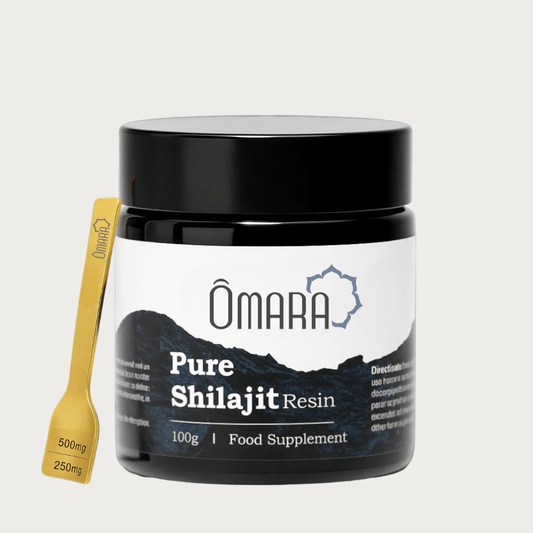
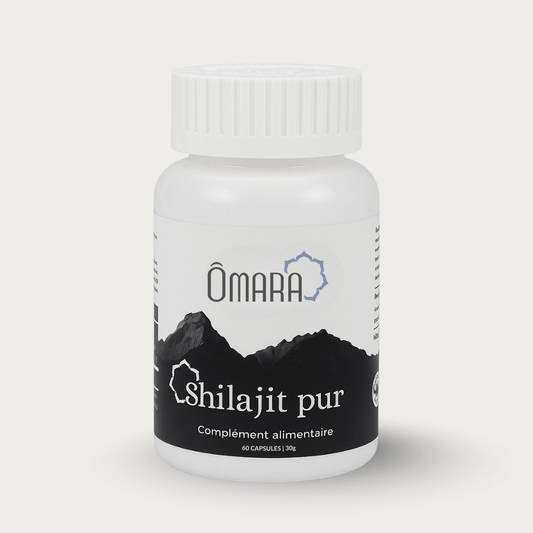
Shilajit resin is often chosen for its more traditional approach. Capsules are easier to integrate into a stable routine.
That said, the format never compensates for a lack of transparency about quality.
Shilajit, stress and overall balance
Many people are interested in shilajit for its benefits in addressing fatigue, recovery, or stress. If this applies to you, you can also read our article on shilajit and cortisol .
But even in this context, the same basic rule must be kept: in case of hypertension or treatment, one proceeds with caution.
What signs should raise concern?
If a person with high blood pressure tries a new supplement, they should be attentive to any unusual reactions.
For example :
- faintness ;
- palpitations;
- unusual headaches;
- unexplained fatigue or discomfort;
- unusual variation in voltage.
In this case, you should stop taking the medication and seek professional advice.
Does shilajit replace the basics of good care?
No. In cases of hypertension, the underlying principles remain the same:
- medical monitoring;
- sufficient sleep;
- stress management;
- adapted physical activity;
- balanced diet;
- regularity in lifestyle habits.
An addition, however interesting, can never replace these fundamentals.
Key takeaways
Can shilajit be taken with hypertension? Sometimes, depending on the individual, but certainly not without considering the individual context.
If you have high blood pressure, are taking antihypertensive medication, or have a history of cardiovascular disease, the correct approach is to:
- assess your actual situation;
- check the quality of the product;
- avoid unnecessary accumulations;
- Seek professional advice if you have any doubts.
FAQ: Shilajit and hypertension
Can you take shilajit if you have high blood pressure?
It depends on the individual's profile, blood pressure, medical history, and treatments. Caution is advised in cases of diagnosed hypertension.
Does shilajit raise blood pressure?
We shouldn't give a simplistic answer. Tolerance can vary depending on the individual context and the quality of the product.
Can shilajit be used in combination with antihypertensive treatment?
This combination deserves special attention. If you are considering treatment, professional advice is recommended before taking any medication.
Why is product quality so important?
Because a poorly documented, poorly purified or untested product raises more safety questions than a transparent and controlled product.