Chaga: composition, traditional uses and research status
Share
Chaga: composition, traditional uses and research status
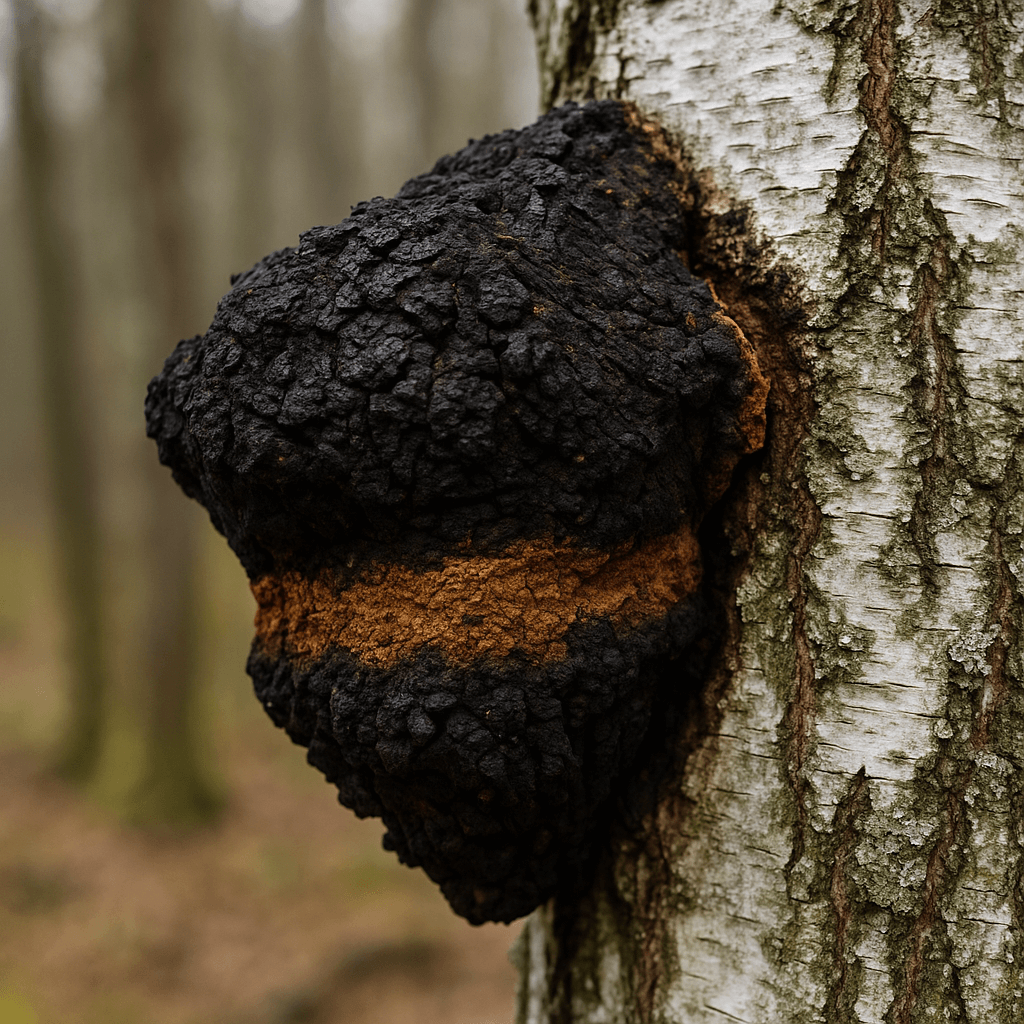
Chaga (Inonotus obliquus) grows mainly on birch trees in cold regions. Its black appearance and long history of use in Russia, Siberia and other boreal areas have made it one of the best-known medicinal mushrooms.
This page is now the main Chaga guide on Ômara. It replaces broad older claims with a clearer approach: composition, traditions, research, quality and precautions.
What is Chaga?
Chaga is not a classic capped mushroom. The dark mass harvested from birch is a sclerotium rich in pigments and compounds derived from both the fungus and its environment.
To place its uses in historical context, see Medicinal mushrooms: history, traditions and pharmacopoeias.
Main compounds studied
Beta-glucans and polysaccharides
Like many mushrooms, Chaga contains polysaccharides including certain beta-glucans. They are studied for their interactions with the immune system, but their presence does not mean that a product predictably “boosts immunity” in everyone.
Polyphenols
Chaga contains several phenolic compounds associated with antioxidant potential in experimental models. Laboratory findings should not be translated directly into anti-aging or therapeutic promises in humans.
Melanin
Chaga’s strong pigmentation is linked in part to melanin. This pigment contributes to its distinctive chemical profile and is among the elements studied in research on oxidative stress.
Triterpenes and birch-derived compounds
The relationship between Chaga and its birch host helps explain the presence of certain triterpenoids or bark-associated derivatives. Their amounts depend on the raw material and extraction process.
What does the research show?
A large share of Chaga research involves cell or animal models. These studies explore antioxidant activity, polysaccharides and several immune or metabolic mechanisms.
Human data are much more limited. It is therefore excessive to present Chaga as a treatment for cancer, diabetes, cardiovascular disease or an immune disorder.
Infusion, powder or extract?
A traditional decoction and a concentrated extract do not provide exactly the same compound profile. To compare two products, look at:
- the part of Chaga used;
- origin;
- extraction type;
- contaminant analyses;
- markers or standardizations that are actually measured.
Is wild Chaga necessarily better?
No. “Wild” describes a harvesting method, not a guarantee of purity. A mushroom collected from its environment can also accumulate certain contaminants. Traceability and testing remain important.
Precautions
Chaga may raise questions in particular with anticoagulant or antidiabetic treatment, or in certain kidney-related contexts. Data are insufficient during pregnancy and breastfeeding. Prolonged use at high doses is not trivial, notably because of compounds such as oxalates.
Chaga, Reishi, Cordyceps or Lion’s Mane?
Chaga stands out mainly for its birch-derived matrix and its studied antioxidant profile. For cognition, Lion’s Mane is more specific; for exercise, Cordyceps is more relevant; for uses related to calm, see Reishi.
In summary
Chaga is a fascinating mushroom because of its history and composition, but human evidence remains limited. Its editorial role on Ômara is now clear: explain what Chaga is, its composition, traditional uses and the limits of the research — without selling a product that is no longer in the catalogue.