Peruvian Maca: benefits, energy, and natural libido
Share
Article written by the omara.bio team · Last updated: May 2026 · Reading time: 12 min
Maca, an Andean root cultivated for over 2,000 years in the Peruvian highlands, has become one of the most popular adaptogenic plants in Europe. Nicknamed "Peruvian ginseng", it is traditionally used to support the energy, fertility, and physical resilience of populations living at over 4,000 meters above sea level — an environment where few plants thrive.
Its interest today extends far beyond the Andes. Athletes, women in hormonal transition, men seeking to support their libido, tired or stressed individuals: Maca attracts a wide audience because it is gentle, versatile, and very well tolerated. But behind its flattering reputation, there is a reality to be aware of: not all Maca is created equal, and its mechanism of action is different from what many imagine.
At omara.bio, we believe in transparent and nuanced information. This page provides a comprehensive overview of Maca: what it is, what it can offer, how to choose it, who it is suitable for, and its limitations.
Key Takeaway
Maca (Lepidium meyenii) is an Andean root traditionally used to support energy, libido, and hormonal balance, in both men and women. Unlike Tongkat Ali or ginseng, it is not a stimulant and does not directly increase testosterone: it acts more as a nutritional and adaptogenic support. Its effects build up over time.
What is Maca?
Origin and tradition
Maca, botanically named Lepidium meyenii, is a plant of the Brassicaceae family — the same family as cabbage, turnip, or radish. It grows exclusively on the high plateaus of the Peruvian Andes, mainly in the Junín region, at altitudes between 3,800 and 4,500 meters. At these extreme altitudes, oxygen is scarce, the cold is biting, and UV radiation is intense: few plants can resist. Maca, however, thrives there.
This resilience partly explains its reputation. For the Incas, it was both a staple food and a support for warriors and families seeking to conceive. Even today, in Andean villages, it is consumed cooked, fermented, or as a warm drink, almost like a vegetable.
Why the nickname "Peruvian ginseng"
Like Asian ginseng, Maca is seen as a support for vitality and resistance. But the comparison stops there. Botanically, the two plants have nothing in common. And their effects are not comparable either: ginseng has a more stimulating profile; Maca is more nourishing and progressive. It is a plant that "nourishes" the body rather than pushing it.
Yellow, Red, Black Maca: What are the differences?
An important particularity: Maca exists in several natural colors, which are not just a simple aesthetic detail but correspond to traditionally different compositions and uses.
- Yellow Maca: the most common (60-70% of harvests). Versatile, balancing profile, suitable for general daily use.
- Red Maca: traditionally associated with female support (hormonal balance, menopause) and prostate health in men. Rarer.
- Black Maca: the rarest (about 10-15%). Traditionally associated with energy, male libido, and performance. It is also the most studied for its effects on memory and fertility.
Some supplements mix all three colors ("Tri-Color Maca") to offer a broad profile. Others focus on a single color depending on the objective. A good brand clearly indicates the color or proportion used.
Composition and Nutrition
Maca is first and foremost a nutrient-dense food, and that is undoubtedly where a significant part of its interest lies. Its dried root contains:
- about 13-16% vegetable protein, with an interesting amino acid profile;
- many minerals: calcium, iron, potassium, zinc, magnesium, copper;
- B vitamins and vitamin C;
- significant amounts of fiber;
- specific bioactive compounds: macamides and macaenes, glucosinolates, plant sterols, alkaloids.
Macamides in particular are compounds studied for their potential role in the observed effects on mood, libido, and energy. It is these that distinguish traditional Andean Maca from lower quality products.
The Studied Benefits of Maca
Several research areas are interested in Maca, with a growing body of scientific literature since the 2000s. Here is an honest overview, keeping in mind that studies are often small-scale and that effects depend on the type of Maca, dosage, and duration of use.
Maca and energy
This is the oldest traditional use. Maca is consumed by Andean populations as an energy food to support physical work at altitude. Several modern studies report a subjective improvement in perceived energy and resistance to fatigue in participants following a several-week course.
Important: Maca is not a stimulant. It does not cause a peak, increased heart rate, or nervous excitement. Its action is more through background support — nutritional and adaptogenic. For people who do not tolerate caffeine or strong stimulants, it is an asset.
Maca and libido
This is probably the subject on which Maca has received the most media attention — and it is also one of the areas where research is most convergent. Several clinical studies have reported an improvement in sexual desire, in both men and women, after 6 to 12-week courses, with different types of Maca.
Notably: these effects were observed independently of testosterone levels. In other words, Maca does not directly increase sex hormones. Its effect on libido would involve other pathways — possibly macamides, global nutritional support, and an adaptogenic effect on stress and mood.
This difference is important. It explains why Maca is suitable for women (in whom an increase in testosterone is not desirable) as well as men, and why it lends itself to long-term use without disrupting hormonal balance.
Maca and female hormonal balance
Several studies have explored the effect of Maca, especially red Maca, on menopause-related symptoms: hot flashes, sleep disturbances, mood swings, decreased libido. The results are generally encouraging, even though Maca does not contain estrogen and does not act as hormone replacement therapy.
The proposed mechanism: Maca would support the hypothalamic-pituitary-gonadal axis, i.e., the "orchestrator" of hormonal balance, without providing exogenous hormones. It does not "replace" anything; it "accompanies" the body in its own functioning.
Note: Maca does not replace medical follow-up in cases of significant menopausal symptoms or proven hormonal disorders. It can be used as a supplement, after professional advice.
Maca and fertility
Some preliminary research has explored the effect of Maca on sperm quality (concentration, motility). The results are promising, but studies are still few and small-scale. As with any plant, Maca should not be presented as a treatment for infertility. In case of difficulty conceiving, the first step remains a medical evaluation.
Maca and physical performance
Andean tradition and several modern studies report an effect on endurance and recovery in athletes, particularly in endurance disciplines. The hypothesis: a combined effect of nutritional support, adaptation to stress, and possibly better oxygen utilization — although this last point remains to be confirmed.
Maca and mood
Several studies report an improvement in mood markers, especially in menopausal women or during periods of fatigue. Here again, the effect seems more progressive than spectacular, and probably involves several pathways (nutrition, adaptogenic, indirect hormonal support).
Maca: who is it for?
Maca can appeal to a very wide audience, making it one of the most accessible adaptogens:
- women in hormonal transition (perimenopause, menopause), seeking gentle support;
- men seeking to support their libido without directly affecting testosterone;
- athletes looking for nutritional and recovery support;
- tired, overwhelmed, or convalescing individuals;
- those who do not tolerate classic stimulants well (coffee, ginseng, guarana);
- people looking to enrich their diet with minerals and plant amino acids.
Conversely, Maca is not recommended or should be supervised:
- for pregnant or breastfeeding women (as a precautionary measure);
- in case of a history of hormone-dependent cancers, without medical advice;
- in case of unbalanced thyroid disorders (Maca contains goitrogens, to be taken with caution in this context);
- for people on hormone therapy, without prior medical advice.
How to take Maca
Available forms
Maca is mainly found in three forms:
- Root powder: the most traditional form. Characteristic, slightly malty taste, which blends well into smoothies, porridge, yogurt, or a hot drink. Gelatinized powder (heated to neutralize certain indigestible compounds) is generally better tolerated by the digestive system.
- Capsules: practical for regular use, stable dosage, no taste.
- Standardized extracts: more concentrated, sometimes titrated in macamides, preferable for long-term therapeutic use.
Indicative dosage
The most commonly cited ranges in research and traditional use are 1.5 to 3 grams per day for powder, and 500 mg to 1.5 g for standardized extracts depending on the ratio. These figures are given for informational purposes only.
Some useful principles:
- Follow the manufacturer's recommendations indicated on the chosen product.
- Prefer gelatinized Maca in case of digestive sensitivity.
- Start with a moderate dose and observe tolerance.
- Maca is generally well tolerated long-term, but 8 to 12-week courses with breaks remain good practice.
When to take Maca?
Preferably in the morning or early in the day. It can be taken with or without meals, depending on digestive tolerance. Some people take it fractionated (morning and noon). Avoid in the evening if you are sensitive: although not stimulating, it can create a slight boost of energy in some individuals.
How long before feeling the effects?
Maca is not a product with immediate effect. Most studies and feedback report benefits felt after 2 to 6 weeks of regular intake. For effects on libido, mood, and hormonal balance, it often takes 6 to 12 weeks to evaluate honestly.
The common mistake: trying for a week then giving up, due to not feeling an effect quickly. Maca requires regularity.
Possible side effects
Maca is generally very well tolerated. Reported side effects are rare and usually mild:
- mild digestive discomfort, especially with non-gelatinized powder;
- bloating in some sensitive individuals;
- slight agitation or sleep disturbances if taken late (rare);
- occasional headaches at the beginning of a course.
These effects usually disappear by reducing the dose, switching to a gelatinized form, or taking it earlier in the day.
Precautions and contraindications
Precautions to be aware of
Maca is very well tolerated, but some situations require caution or medical advice before introducing it.
Maca is not recommended or should be medically supervised:
- for pregnant or breastfeeding women, as a precautionary measure;
- in case of a history of hormone-dependent cancers;
- in case of unbalanced thyroid disorders (presence of goitrogens);
- for people on hormone therapy or hormone replacement, without medical advice;
- for children and adolescents.
If in doubt, seek advice from a healthcare professional before starting a course.
How to choose quality Maca
The Maca market is uneven. Here are the criteria to consider for a good choice:
- Peruvian origin, ideally from the Junín region, at over 4,000 meters above sea level. Maca cultivated outside the Andes (especially in China) does not have the same macamide profile.
- Color clearly indicated (yellow, red, black, or tri-color), with proportions if relevant.
- Gelatinized form preferably for powder, which improves digestibility and bioavailability.
- Organic certification: traditional Maca is cultivated without pesticides, but organic certification remains a good benchmark.
- Purity tests: analysis of heavy metals, pesticides, contaminants.
- Standardization in macamides for extracts, a guarantee of quality and consistency from one batch to another.
- Transparency on traceability: a good manufacturer communicates about the producer, altitude, and drying method.
At omara.bio, we select all our plants according to these purity and traceability criteria. Discover our approach →
Maca vs other adaptogenic plants
| Plant | Dominant profile | Main indication | Specificities |
|---|---|---|---|
| Maca | Energetic, nutritive | Energy, libido, hormonal balance, endurance | Very well tolerated, mixed for men/women |
| Tongkat Ali | Male tonic | Vitality, libido, testosterone, stress | More male-oriented, to be taken in the morning |
| Ashwagandha | Soothing, anti-stress | Stress, sleep, anxiety, recovery | Suitable for evening, mixed |
| Ginseng (Panax) | General tonic | Fatigue, concentration, vitality | More stimulating, to be avoided in the evening |
| Shatavari | Feminine, nourishing | Female balance, menopause, fertility | Specific to the female audience |
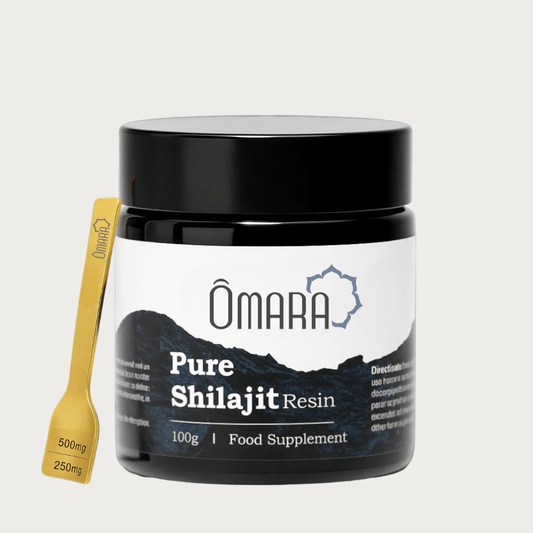
Maca holds a special place: it is probably the most versatile and best-tolerated adaptogen on the chart. It combines well with other plants — Ashwagandha for stress, Tongkat Ali for male vitality, or even Shilajit resin for overall mineral support.
Maca and holistic approach
Maca naturally integrates into a global well-being approach:
- Sleep: 7 to 9 hours of quality sleep, the foundation of all hormonal balance.
- Regular physical activity, especially outdoors.
- Varied diet, rich in protein, good fats, and vegetables.
- Stress management: breathing, walking, disconnecting.
- Hydration and exposure to natural light within the first hour of the morning.
Maca enriches this set — it doesn't replace it.
FAQ — Maca
Does Maca increase testosterone?
No, not directly. Unlike Tongkat Ali, Maca does not act on testosterone. Its effect on libido and vitality works through other pathways (nutritional support, adaptogenic, global hormonal axis). This makes it a suitable plant for both women and men.
Which Maca to choose: yellow, red, or black?
Yellow is versatile, ideal for general use. Red is traditionally associated with female support (menopause) and prostate health. Black is rarer, traditionally linked to male libido and memory. A tricolor formula offers a broad profile.
How long does it take to feel the effects of Maca?
2 to 6 weeks for energy effects. For libido, mood, and hormonal balance, it is recommended to evaluate after 8 to 12 weeks. Maca requires regularity.
Can you take Maca every day?
Yes, as part of a structured course, respecting the dosages. Regular breaks (for example, 8 to 12 weeks of treatment followed by 2 to 4 weeks of break) remain good practice.
Is Maca a stimulant?
No. It contains neither caffeine nor nervous stimulants. Its effect on energy is progressive, through nutritional and adaptogenic support.
Is Maca suitable for women?
Yes, particularly well. It is traditionally used to support female hormonal balance, especially during perimenopause and menopause. Red Maca is often recommended in this context. Consult a professional if you are undergoing hormonal treatment.
Is Maca good for menopause?
Several studies suggest it can support comfort during menopause (mood, sleep, libido, hot flashes). It does not contain hormones and does not act as a substitute treatment. Always consult a doctor for appropriate follow-up.
Maca or Tongkat Ali: which one to choose for a man?
It depends on the objective. Maca is milder, energetic, and nutritious, suitable for both sexes, and for long-term use. Tongkat Ali has a more pronounced profile regarding testosterone and male vitality. The two can even be combined in some approaches.
Maca or Ashwagandha: which one to choose?
Ashwagandha excels at stress, anxiety, and sleep. Maca excels at energy, libido, and hormonal balance. They address different needs and can complement each other depending on the profile.
Maca or Ginseng?
Maca is milder, more nutritious, suitable for both sexes, and has no stimulating effect. Ginseng is more tonic, more stimulating, to be avoided in the evening and by anxious or hypertensive individuals. For long and peaceful use, Maca is often more accessible.
Does Maca have a particular taste?
Yes, the powder has a characteristic slightly malty, earthy taste, which can be surprising. Many find it pleasant when mixed with a smoothie, hot drink, or porridge. Capsules help avoid the taste.
Should gelatinized Maca be preferred?
For powder, yes: gelatinization (a mild heat treatment) neutralizes some indigestible compounds and improves assimilation. For standardized extracts and capsules, this is not relevant.
Can Maca be taken during pregnancy?
No, as a precautionary principle, in the absence of sufficient data on pregnancy and breastfeeding. Always consult a professional.
Does Maca interact with medications?
It can interfere with certain hormonal or thyroid treatments. If you are taking medication, seek medical advice before starting a course of treatment.
How to recognize quality Maca?
Peruvian origin (Junín), altitude above 4,000 m, indicated color, gelatinized form for the powder, organic certification, available purity tests, clear traceability.
In summary
Maca is one of the most versatile and best-tolerated adaptogens. Its interest lies in gentle, nourishing, and progressive support for energy, libido, and hormonal balance — in both men and women. It does not stimulate, it does not disrupt hormonal balance, it supports.
Three principles to remember:
- Quality matters: Andean origin, gelatinization, traceability.
- Regularity is essential: allow 6 to 12 weeks for evaluation.
- Maca is a support, not a treatment. In case of significant symptoms or ongoing treatment, medical advice remains a priority.
Naturally support your vitality
Discover the omara.bio selection: premium adaptogens, rigorously chosen, for those who seek balance, not shortcuts.
View our adaptogensThis article is for informational purposes only. It does not replace medical advice. In case of illness, ongoing treatment, or doubt, consult a healthcare professional. Dietary supplements do not replace a varied and balanced diet and a healthy lifestyle.
Magnifiquement bon ✨
Bonne résine bonne qualité avec des certificats de laboratoire pour la traçabilité
Diminution importante des douleurs d'arthrose, amélioration de la digestion et de l'énergie dès quelques semaines et confirmées après plusieurs mois
Je prenais déjà du Shilajit d'une autre marque mais j'ai choisi celui-ci pour sa pureté et son éthique.
Je dois dire que ça m'aide beaucoup durant cette période de changement hormonal (bouffées de chaleur, sommeil). Une très belle trouvaille.