
Shilajit in Switzerland: the complete and reliable guide
Share
Shilajit is a natural mineral resin traditionally used in certain Ayurvedic practices. In Switzerland, interest in shilajit has grown significantly, but not all available products are created equal.
This page aims to provide a comprehensive, neutral and verifiable guide on shilajit in Switzerland, to help understand what it really is, what the essential quality criteria are and how to avoid risky products.
What is shilajit?
Shilajit is a natural substance that forms over long periods in mountainous areas. It results from the slow decomposition of plant matter trapped in rocks, combined with pressure, heat, and microbial activity.
When mature, this substance takes the form of a dark, viscous resin that is soluble in hot water , characteristic of authentic shilajit.
Origin of shilajit and the importance of traceability
Geographical origin is one of the major criteria for the quality of shilajit. The most renowned areas are located in the mountain ranges of Central Asia, particularly the Himalayas, where natural conditions favor a purer formation.
A quality shilajit should be:
- harvested at high altitude,
- originating from areas with low exposure to pollution,
- traceable back to its region of origin.
Why the purification of the shilajit is essential
In its raw state, shilajit naturally contains mineral and organic impurities. Without proper purification, it can also contain problematic amounts of heavy metals.
Purification helps to eliminate:
- undesirable mineral residues,
- plant impurities,
- potential contaminants.
Traditional methods rely on cycles of dissolution and filtration, without aggressive chemical solvents, in order to preserve the integrity of the product.
Shilajit and heavy metals: a major issue
Since shilajit is a mineral concentrate, it can accumulate certain heavy metals present in its natural environment.
The main elements monitored are:
- lead (Pb),
- mercury (Hg)
- arsenic (As),
- cadmium (Cd).
In Switzerland, a reliable shilajit must be analyzed by modern methods such as ICP-MS, with results conforming to European standards applicable to food supplements.
Read the detailed article on shilajit and heavy metal testing
How to recognize a safe shilajit in Switzerland
Before consuming or purchasing shilajit, several essential criteria must be checked:
- Analyses performed by an independent laboratory
- Certificate of Analysis (COA) accessible
- Clearly indicated analytical method (ICP-MS)
- Traceability of origin
- No additives or dilution
A product that does not meet these criteria presents a potential risk.
Resin or capsules: what are the differences?
Shilajit resin
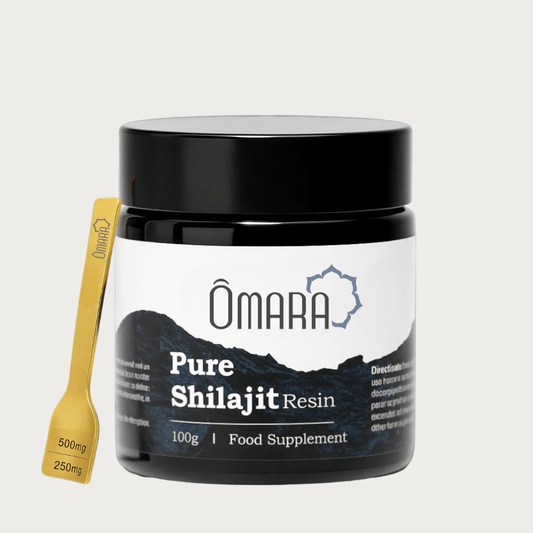
Resin is the most traditional form. It dissolves in a hot liquid and allows for flexible dosing.
Shilajit capsules
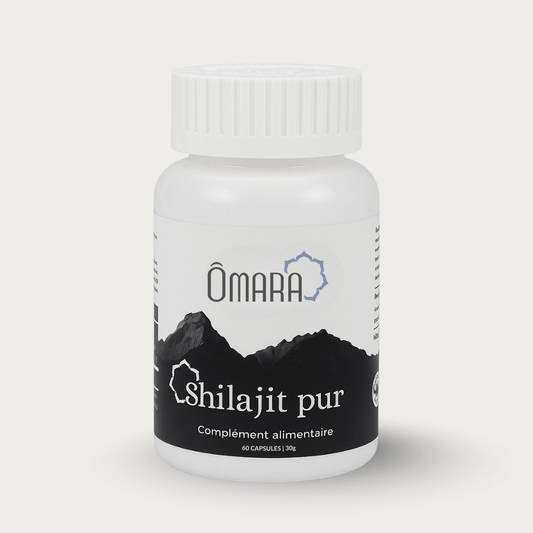
Capsules offer easier to take and a neutral taste, with a standardized dosage.
The choice depends primarily on lifestyle and personal preferences.
Dosage and responsible use
Shilajit is traditionally used in very small quantities. For the resin, the commonly mentioned dose is equivalent to one grain of rice per day.
Consult the detailed guide on the dosage and use of shilajit
Shilajit is a food supplement and does not replace medical advice.
Example of shilajit conforming to quality criteria
In Switzerland, some manufacturers publish batch analyses and ensure complete transparency regarding origin and purification. This is notably the case with shilajit offered by Ômara , whose products are accompanied by certificates of analysis issued by an independent laboratory.
Discover an example of shilajit analyzed and traceable in Switzerland
Frequently Asked Questions
Is shilajit legal in Switzerland?
Yes, when it is marketed as a food supplement that complies with Swiss and European requirements.
Is it safe to consume shilajit every day?
Yes, when used in moderation and in accordance with recommendations.
Is shilajit suitable for everyone?
It is not recommended for pregnant or breastfeeding women and people undergoing medical treatment without professional advice.
Conclusion
Shilajit can be a valuable supplement provided it is authentic, purified, and rigorously controlled. In Switzerland, safety, transparency, and traceability are the most important criteria for making an informed choice.