
Shilajit certificate of analysis: heavy metals, COA and laboratory testing
Share
Shilajit certificate of analysis: heavy metals, COA and laboratory testing
A certificate of analysis — often called a COA — documents certain parameters measured on a batch of Shilajit. This page does not explain how to “recognize” a product by appearance: it focuses on how to read laboratory analyses.
For general safety criteria related to heavy metals, see our page Shilajit and heavy metals: how to choose a safe, high-quality product. For signs that can be observed at home, see how to recognize authentic Shilajit.
What is a COA?
A COA is a document presenting the results of analyses performed on a sample. Its value depends on what was actually tested, the method used, identification of the batch and traceability of the laboratory.
A serious certificate should at minimum allow you to identify:
- the product or sample analyzed;
- a batch number or reference linking the certificate to the product;
- the analysis date;
- the laboratory;
- the parameters analyzed;
- the results and their units;
- the method used when this is stated.
Heavy metals to monitor
Shilajit testing commonly includes elements such as lead, cadmium, mercury and arsenic. The important point is not simply seeing the word “tested,” but having measured values, understandable units and a relevant regulatory context.
A simple “heavy-metal-free” badge does not provide the same level of information as a document linked to a batch and issued by an identifiable laboratory.
ICP-MS: why is this method often mentioned?
ICP-MS is a mass-spectrometry technique used to measure elements at very low concentrations. It is frequently used for metal analysis in complex matrices.
The mention of ICP-MS is useful, but it is not enough to assess an entire product: you still need to read which parameters were measured, the results and the batch concerned.
Batch testing: why it matters
Shilajit is a natural material. Two batches can differ. An old or generic certificate therefore does not necessarily document the product currently being sold.
When possible, check that the batch number on the product matches the one on the certificate provided.
What can a certificate prove?
A certificate can document the parameters that were actually analyzed. For example, if four metals were measured, the document informs you about those four parameters — not automatically every possible contaminant.
Two mistakes should therefore be avoided:
- assuming that a COA “proves everything”;
- assuming that a home test can replace a COA.
What about fulvic acid?
Some certificates also state a fulvic acid content. This describes part of Shilajit’s composition, but it should not become a shortcut such as “the higher the percentage, the better the product.”
To understand this marker, see our article on fulvic acid and Shilajit.
Checklist for reading a COA
- Is the laboratory clearly identified?
- Is the document dated?
- Can the analyzed batch be identified?
- Are the results quantified with their units?
- Are the metals or contaminants tested listed?
- Is the analytical method stated?
- Does the certificate correspond to the product currently being sold?
Example: Ômara products
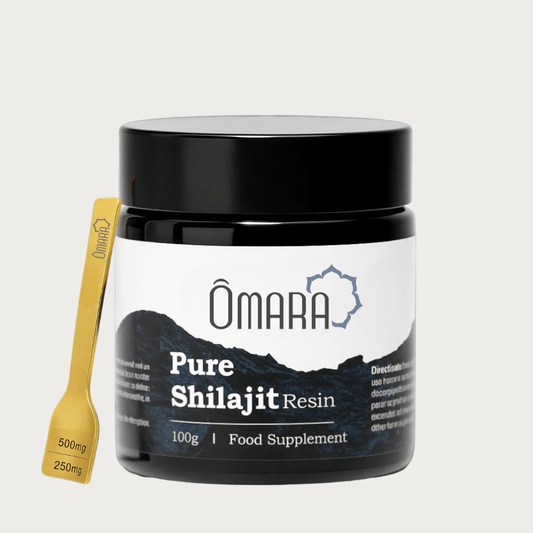
For a purchase in Switzerland, you can start from our Shilajit collection and review the information provided for each product. The Ômara by Terrame resin and the Ômara by Ammala resin are two distinct references: their product criteria should be read separately, without assuming that one certificate automatically applies to the other.
In summary
A good certificate of analysis is more than a laboratory logo. It should be readable, dated, linked to a batch and detail the parameters measured. When choosing Shilajit, the COA complements traceability, purification and product information; it does not replace them.