Shilajit resin or capsules: which format to choose according to your routine?

Shilajit can be taken in several forms, but two formats are most common: resin and capsules.

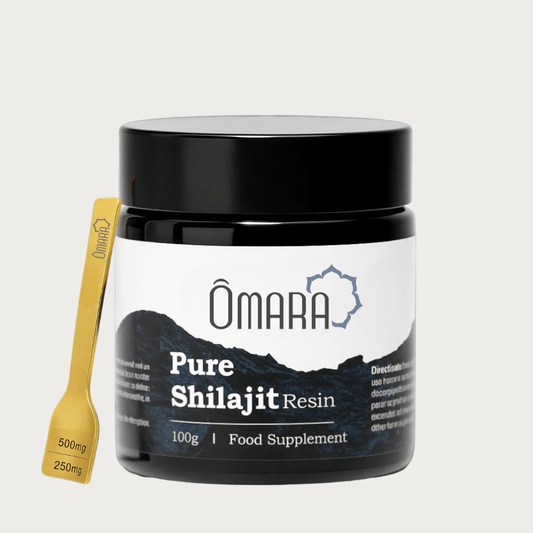
Resin is the closest format to traditional use. It requires a small preparation step, dilution in a warm drink, and retains shilajit's naturally mineral taste. It's a rawer, more sensory experience, but also a little more demanding on a daily basis.

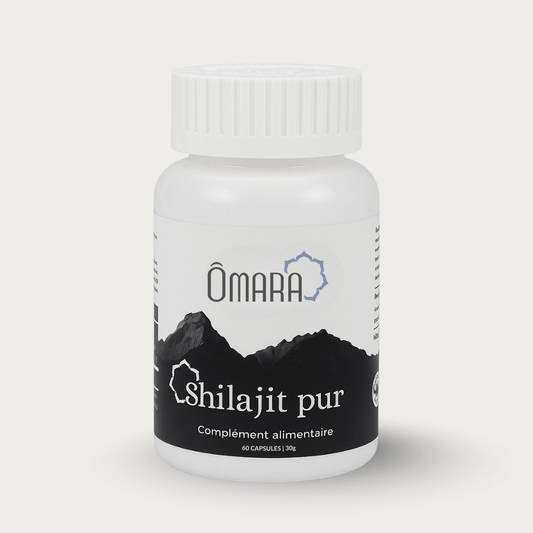
Capsules, on the other hand, follow a different logic: simplicity, clear dosage, absence of taste, and ease of transport. They are often better suited for people who want to integrate shilajit into an already busy routine, without special preparation.

So, should you choose shilajit resin or capsules? The answer mainly depends on your taste, your lifestyle, your relationship with supplements, and the format you can actually stick with over time.

Resin or capsules: two very different ways to take shilajit

Resin and capsules don't offer the same experience.

Shilajit resin comes in a dense, dark, and slightly sticky form. A small amount is usually taken with a spatula before being diluted in warm water, an herbal tea, or another non-boiling hot drink.

Pure shilajit capsules, on the other hand, contain an already measured quantity. They are simply taken with a glass of water, like a classic dietary supplement.

In both cases, the most important point remains the same: the quality of the shilajit. Its origin, purification, composition, the controls carried out, and the brand's transparency matter more than the format alone.

A shilajit resin is not automatically excellent. And a capsule is not automatically less interesting. Everything depends on the raw material, the preparation method, the dosage, and the available analyses.

Key takeaways before choosing

If you like natural rituals, raw textures, and minimally processed products, resin will often be the most appealing format.

If you are sensitive to taste, travel frequently, or want a very simple intake, capsules will probably be more suitable.

If you're new to shilajit, it may be wise to start with an easy-to-integrate format: a milder-tasting resin or pure capsules, depending on your preference.

If you are already taking a formula containing shilajit, avoid combining several products without checking the dosages.

Shilajit resin: for whom?

Resin is particularly suitable for people who appreciate simple, natural, and slightly more ritualized actions.

It requires a few seconds of preparation, but this is also what many people like: taking the time, diluting the substance, observing its texture, sensing its mineral taste, creating a real moment around the product.

It is the closest format to the traditional use of shilajit. It retains a more "material," more direct dimension, less standardized than a capsule.

For those who enjoy ritual

Resin easily integrates into a morning routine. A small amount in a warm drink is enough to create a regular, simple, and daily habit.

This format may suit you if you like raw products, natural routines, and supplements that don't feel like taking a classic pill.

In practice, it's often very clear from the first few days: either you appreciate this small ritual, or you quickly realize that you'll be more consistent with capsules.

For those who want flexible dosing

Resin allows you to adjust the quantity according to the product recommendations. This flexibility can be appreciated by people who want to start gently or gradually adapt their routine.

This does not mean that you should freely increase doses. Shilajit is a concentrated supplement: it is better to follow the usage instructions indicated on the product rather than trying to take more.

For those who accept a strong taste

Shilajit resin has a naturally mineral, earthy, and resinous taste. This is normal.

Some people like this raw aspect. Others find it too intense. If you know that mineral or earthy tastes bother you, capsules will often be more comfortable.

There are also milder-tasting resins, which are easier to try when starting out.

Shilajit capsules: for whom?

Capsules are suitable for people who want a simple, quick, and discreet intake.

They are particularly interesting if you don't like the taste of resin, if you travel often, or if you want to integrate shilajit into an already established routine.

For a more practical routine

With capsules, there's nothing to prepare. No spatula, no dilution, no particular texture.

It's the simplest format for people who want to stay consistent without having to think about it too long.

For many people, it's precisely this simplicity that makes the difference. A routine that's too complicated, even with a very good product, often ends up being forgotten.

To avoid the taste of shilajit

This is one of the big advantages of capsules: they allow you to take shilajit without experiencing its naturally intense taste.

If you've already tried resin and didn't like its taste, it doesn't necessarily mean that shilajit isn't for you. The capsule format can be a more comfortable alternative.

For clear and stable dosing

Each capsule contains a defined amount of shilajit. This allows for easy-to-follow intake, without approximation.

This format is often appreciated by people who want a simple, stable, and clear routine, especially when they are already taking other dietary supplements.

Is resin really better than capsules?

It is sometimes said that resin is always superior to capsules. In reality, it's more nuanced.

Resin has the advantage of being closer to the traditional format. It retains a texture, taste, and ritual that appeal to people looking for a raw experience. It also allows for more flexible dosing, provided the product recommendations are followed.

Capsules require more processing, as a dry, stable, and dosed format must be obtained. But this does not automatically make them less interesting. Pure shilajit capsules, well-dosed, without superfluous additives, and laboratory-tested, can be a very consistent choice, especially if they help you to be more consistent.

The real criterion is therefore not just the form. It's the quality of the shilajit, the transparency of the analyses, the dosage, the tolerance, and the regularity of use.

Resin or capsules: comparative table

Criterion Shilajit resin Shilajit capsules
Taste Strong, mineral, earthy Neutral
Preparation To be diluted in a warm drink To be taken with water
Ritual More traditional More practical
Dosage Flexible, according to recommendations Already measured
Transport Less practical Very practical
Experience Sensory, raw, natural Simple, discreet, regular
Ideal for People who like raw products People sensitive to taste or in a hurry
Beginners Yes, if the taste is mild Yes, very easy to integrate

So, there isn't one format that's better for everyone. There's mainly one format that's more adapted to your daily life.

Which format to choose to start?

If you're new to shilajit, two options are generally the simplest.

You can start with a milder-tasting resin if you want to discover the traditional format without an overly intense experience.

You can also choose capsules if you want an easy intake, without taste or preparation.

Premium resin will be more suitable for people who already know they like raw products, natural rituals, and mineral textures.

Capsules will be better if your priority is regularity: a simple, clear, easy-to-follow intake, without any particular taste.

At Ômara, which shilajit format should you choose?

At Ômara, we offer several formats to meet different routines.

The Ômara by Terrame shilajit resin is often the most accessible format to start with. It is well suited for people who want to discover resin with a milder experience, while still using a pure and controlled shilajit.

The Ômara by Ammala shilajit resin is more for people who are looking for a rawer, more traditional experience, with a more pronounced mineral taste and an approach very close to the original material.

Pure shilajit capsules are the most practical choice if you want to avoid the taste, simplify dosing, and easily carry your routine with you.

Finally, the Ômara Shilajit collection also includes formulas that combine shilajit with other natural active ingredients, for people who prefer a routine already composed for a specific use.

What if you're torn between pure shilajit and a formula with shilajit?

Some formulas combine shilajit with other plants or natural extracts, such as ashwagandha, bacopa, Lion's Mane, shatavari, Tongkat Ali, or turmeric.

These formulas do not necessarily replace pure shilajit. They rather respond to another logic: integrating shilajit into a more targeted composition, with several active ingredients combined in the same routine.

For example, someone who simply wants to discover shilajit will often start with a pure shilajit resin or capsules.

Someone who wants an already combined formula can turn to a complex like Shilajit & Ashwagandha or Lion’s Mane + Bacopa + Shilajit, provided they carefully read the composition, dosages, and precautions.

The important point: if a formula already contains shilajit, it is best to avoid adding pure resin or capsules without checking the total daily intake.

How to choose simply?

Here's a simple way to decide.

If you like natural rituals, choose the resin.

If you are sensitive to taste, choose capsules.

If you want very simple dosing, capsules will be more practical.

If you want a more traditional experience, resin will be more suitable.

If you're new to shilajit, start with a format that's easy to integrate, without trying to combine too many products.

If you are already taking a formula that contains shilajit, avoid combining several products without checking the dosages.

If you're still hesitant, ask yourself a very simple question: which format will you really want to take two weeks from now?

That's often the best answer.

Quality remains more important than format

Resin or capsules, the real issue remains quality.

Good shilajit must be clear about its origin, composition, purification method, and the controls carried out. The fulvic acid content can be an interesting indicator, but it is not sufficient on its own.

Transparency regarding analyses, heavy metals, dosages, and precautions is essential.

It is better to choose a shilajit explained with seriousness than a product that promises too much.

This is also why we recommend consulting the information available on shilajit tests, heavy metals, and analysis certificates, especially when it comes to a product naturally derived from mineral materials.

Precautions before taking shilajit

Shilajit is a natural food supplement, but this does not mean it is suitable for everyone.

As a precaution, it is not recommended for pregnant or breastfeeding women, children, and individuals under medical treatment without professional advice.

People with chronic illnesses, kidney, liver, cardiovascular, or hormonal disorders, or those already taking multiple supplements, should consult a healthcare professional before taking it.

It is also preferable to follow recommended dosages and avoid combining multiple products containing shilajit.

A food supplement does not replace a varied diet, a balanced lifestyle, or medical follow-up when necessary.

Conclusion: the right format is the one you will actually stick with

Both shilajit resin and capsules have their advantages.

Resin offers a more traditional, raw, and ritualistic experience. It is well suited for people who enjoy natural products in their most sensory form.

Capsules are more practical, more neutral in taste, and easier to integrate into a quick routine. They can be an excellent choice if your priority is simplicity and regularity.

The right choice is not necessarily the most impressive on paper. It's the one you can take regularly, simply, and effortlessly.

At Ômara, we offer several shilajit formats so that everyone can choose a routine adapted to their daily life: mild resin for discovery, rawer resin for connoisseurs, pure capsules for practicality, and combined formulas for more targeted routines.

FAQ

Is shilajit resin better than capsules?

Not necessarily. Resin is more traditional and closer to the raw material, but capsules can be very beneficial if they are pure, well-dosed, and tested. The best choice mainly depends on your taste, routine, and consistency.

Are shilajit capsules easier to take?

Yes. They require no preparation and don't have the strong taste of resin. They are well suited for people who want a simple, quick, and easy-to-follow intake.

Does shilajit resin have a strong taste?

Yes, resin naturally has a mineral, earthy, and resinous taste. Some people appreciate it, others prefer capsules for this reason.

Which form of shilajit should I choose if I am sensitive to taste?

Capsules are generally the most suitable because they avoid the natural taste of shilajit. A milder-tasting resin can also be a good option if you want to gradually discover the traditional format.

Which format should I choose to start with?

To start, capsules are often the simplest. A mild-tasting resin can also be a good option if you want to experience the traditional ritual without starting with an overly intense experience.

Can I alternate between resin and capsules?

Yes, but you should avoid accumulating doses. If you alternate between several formats, carefully check the total amount of shilajit taken per day.

Can I take a formula with shilajit in addition to pure shilajit?

It's best to be cautious. Some formulas already contain shilajit. Before combining several products, check the dosages and seek advice from a healthcare professional if in doubt.

When should I take shilajit?

Shilajit is often integrated into a daily routine, usually in the morning or early in the day. The most important thing is to follow the usage instructions indicated on each product.

Where can I find the different Ômara shilajit formats?

You can find resins, pure capsules, and combined formulas in the Ômara Shilajit collection.

Back to blog