
10 major Ayurvedic ingredients: traditional uses and level of evidence
Share
10 major Ayurvedic ingredients: traditional uses and level of evidence
Ayurveda has used a wide range of plants, foods and natural materials for centuries. Presenting them as a “ranking of the most powerful” would be misleading: each ingredient has its own history, traditional indication and level of modern evidence.
Here are ten important ingredients for understanding this tradition, without ranking them or attributing therapeutic effects they have not demonstrated.
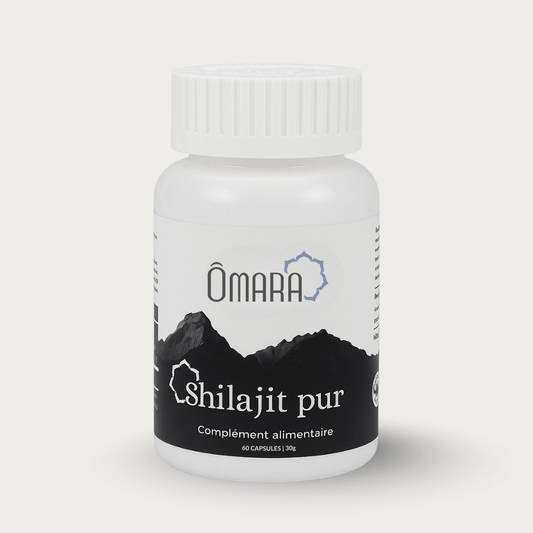
1. Shilajit
Shilajit is an organo-mineral material traditionally classified among the rasayana. Modern research explores its composition, vitality and certain hormonal or physical parameters, but human trials remain relatively few.
Understand Shilajit · See the state of the research
2. Ashwagandha
Withania somnifera is one of the best-studied Ayurvedic plants in relation to stress. Several randomized trials and meta-analyses suggest effects on certain stress and anxiety scores, with limitations related to extracts and protocols.
3. Turmeric
Turmeric (Curcuma longa) is both a spice and a traditionally used plant. Curcumin and other curcuminoids have been widely studied, but their bioavailability and the formulations used vary greatly.
4. Brahmi / Bacopa monnieri
Bacopa is traditionally used in routines related to memory and learning. Human trials and meta-analyses exist for certain cognitive parameters.
5. Triphala
Triphala is a preparation traditionally made from three fruits: Amalaki, Bibhitaki and Haritaki. Its historical uses are mainly digestive. Modern data do not justify presenting it as a general “detox” for the body.
6. Tulsi
Tulsi, or holy basil (Ocimum tenuiflorum), holds an important place in Indian traditions. It is studied in various metabolic and stress-related contexts, but the quality of evidence varies by indication.
7. Shatavari
Asparagus racemosus is traditionally associated with women’s well-being. Modern research remains far less extensive than for Ashwagandha, and it should not be presented as a universal “hormone balancer.”
8. Guduchi
Tinospora cordifolia is traditionally used in several preparations. Experimental and clinical research exists, but claims involving immunity, diabetes or the liver require considerable caution.
9. Ginger
Ginger (Zingiber officinale) is used both as a food and a traditional plant. It has a relatively large research base, particularly in the context of nausea, but its use depends on the preparation and situation.
10. Neem
Neem (Azadirachta indica) has a long history of external and internal use. Traditional expressions such as “purifying the blood” should not be translated literally into a modern medical benefit.
Tradition and science: two levels that should not be confused
A traditional practice explains why an ingredient has been used for a long time. Modern clinical research, in contrast, aims to determine whether an effect can be measured in a defined population with a defined preparation. These two levels can complement one another, but they are not interchangeable.
How to choose an Ayurvedic supplement
- botanical name and precise ingredients;
- documented origin and manufacturing;
- contaminant analyses;
- clear explanation of standardization when applicable;
- no promises of curing disease;
- professional advice in case of treatment or chronic illness.
Key takeaway
There is no single “number one” in Ayurveda. Shilajit, Ashwagandha, Bacopa and Turmeric reflect different traditions and levels of evidence. Useful information means understanding why each ingredient is used, what has been studied and what remains uncertain.