
What is Shilajit? Origin, formation, composition and uses
Share
What is Shilajit? Origin, formation, composition and uses
Shilajit is a natural organo-mineral substance that appears as a dark exudate in certain mountainous regions. It is best known for its historical use in Ayurveda and for its complex composition of humic substances, organic compounds and mineral elements.
This page answers the broadest intent: understanding what Shilajit is. Specialized guides on dosage, studied effects, buying in Switzerland and laboratory analyses are linked below.
Where does Shilajit come from?
Shilajit is associated with several mountain ranges in Asia and other regions. The Himalayas are the best-known commercial origin, but the name “Shilajit” alone does not guarantee a particular origin or level of quality.
How does it form?
Its formation is linked to the slow transformation of organic matter in a mineral environment. The final composition depends on geology, the plant and microbial materials present, climate and the purification process.
For the journey from raw material to finished product, see Shilajit harvesting and production.
What is Shilajit made of?
Shilajit is not a single ingredient. It contains humic substances, including fulvic and humic fractions, along with various organic compounds and mineral elements.
A fulvic acid percentage can be useful information, but it does not prove product quality on its own. See our guide to Shilajit composition.
Why is it used in Ayurveda?
In Ayurvedic tradition, Shilajit is classified among rasayana-type substances associated with vitality and maintaining general balance. These historical uses are important for understanding its reputation, but they are not by themselves modern clinical evidence.
What does modern science say?
Research investigates Shilajit in several areas, but well-controlled human trials remain relatively few. Some data relate to vitality, certain hormonal parameters or physical performance; many other commonly cited effects rely mainly on experimental models.
To distinguish what is established from what remains hypothetical, see Shilajit and science: what do the studies really show?.
Resin or capsules?
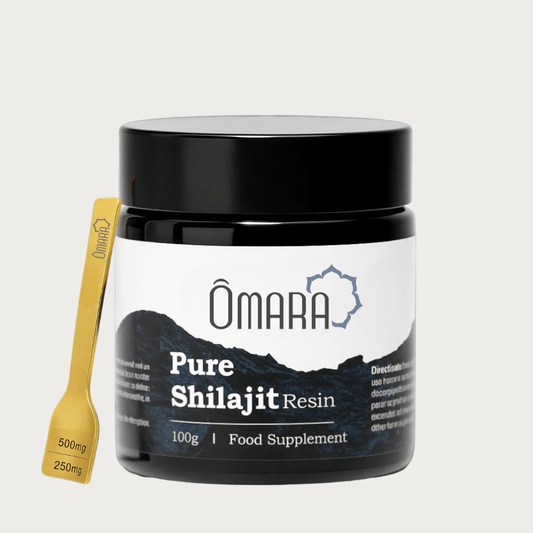
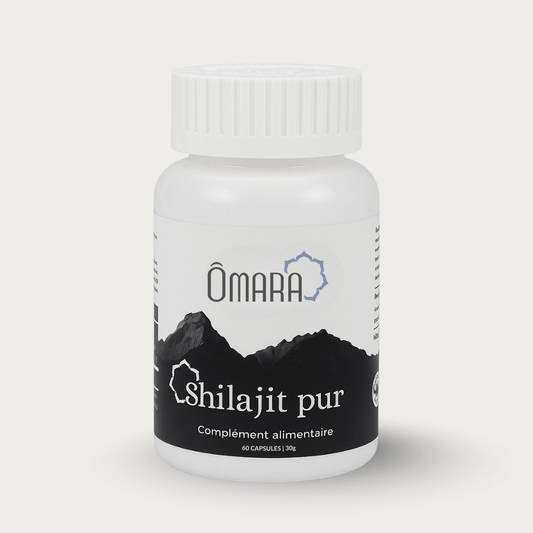
Resin is the more traditional format. Capsules favor convenience and a predefined amount. The best format depends mainly on product quality and the person’s routine.
See the comparison: Shilajit resin or capsules.
Why is purification essential?
Raw Shilajit is not intended to be consumed as-is. Purification and analytical controls are important for limiting impurities and documenting quality.
- Shilajit purification methods
- Tests, heavy metals and certificates
- How can you recognize authentic Shilajit?
Dosage and precautions
The amount depends on the format and product. See the dosage guide and precautions and interactions.
Where can you buy Shilajit in Switzerland?
For this specific commercial intent, see our guide to buying Shilajit in Switzerland.
FAQ
Is Shilajit a plant?
No. It is a complex organo-mineral material, not a single plant.
Is Shilajit a medicine?
No. Depending on the product and market, it is sold as a food supplement and does not replace medical treatment.
Does a high fulvic acid content guarantee good Shilajit?
No. Origin, purification, analytical method, batch and contaminants also matter.
Key points
Shilajit is a complex natural matrix whose interest comes from both its Ayurvedic history and its composition. To evaluate it seriously, it is important to distinguish tradition, experimental data, human trials and the actual quality of the product.